

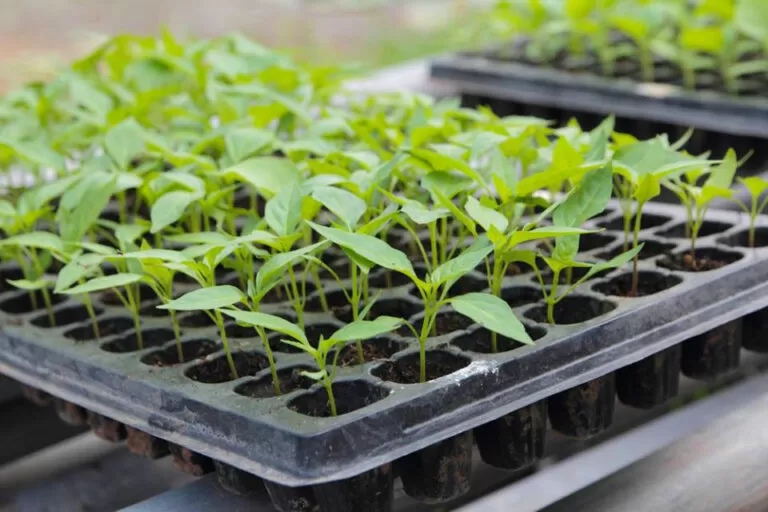
Cocopeat and seedling trays are essential tools in modern vegetable nurseries because they provide a controlled environment for germination and early plant growth. Seedling trays provide individual cells for each plant, ensuring uniform development while cocopeat improves moisture retention and root aeration.
Problems Cocopeat And Seedling Trays Solve
- Reduce seed wastage (one seed per cell)
- Prevent root tangling between seedlings
- Make transplanting easier with minimal transplant shock
- Produce uniform, market-ready seedlings
When combined with cocopeat, seedling trays create a controlled nursery system that improves germination rates and early crop performance.
How to Choose the Right Cocopeat And Seedling Tray for Your Crop
Seedling trays are available in different cell sizes depending on the crop being propagated. The number of cells determines how much space each seedling has to develop its roots before transplanting.
Generally:
- Fewer cells = larger seedlings
- More cells = higher seedling numbers per tray
Below are some of the most commonly used seedling trays in vegetable nurseries.
| Tray Type | Number of Cells | Best Crops |
|---|---|---|
| 50-cell tray | 50 holes | Capsicum, cucumbers, watermelons, tree tomatoes |
| 128-cell tray | 128 holes | Onions, lettuce, herbs |
| 160–200 cell tray | 160–200 holes | Small vegetables and leafy crops |
| 288-cell tray | 288 holes | Very small seeds such as flowers |
Each tray size serves a different purpose. Trays with larger cells, such as the 50-cell tray, are ideal for crops that need more root space during early growth. Trays with smaller cells, such as the 128 or 288 cell trays, are better suited for small seeds and crops that are transplanted quickly.
When choosing a seedling tray, farmers should consider:
- Seed size
- Crop type
- Duration seedlings will stay in the nursery
Best Crops for Cocopeat and Seedling Trays
This nursery system works best for:
- Tomatoes
- Capsicum (hoho)
- Onions
- Cabbage
- Kales (sukuma wiki)
- Watermelon
- French beans
- Tree and fruit seedlings
High-value vegetable nurseries benefit the most because of improved germination and higher survival rates.
How to Use Cocopeat with Seedling Trays For Vegetable Seedlings
Follow these simple steps for best results:
- Lightly moisten cocopeat (do not soak it).
- Fill the trays without compacting the material.
- Place one seed per cell.
- Water gently using a sprayer.
- Keep trays under shade until germination.
- Harden seedlings before transplanting to the field.
Cost Of Cocopeat and Seedling Trays in Kenya
Approximate prices for nursery inputs:
- Cocopeat: Kes 90 per kg.
- Seedling trays: Kes 100 per tray
Despite the small initial investment, farmers save money by reducing seed loss and improving crop success rates.
Why Cocopeat and Seedling Trays Are Ideal for Coastal Farmers
For farmers in coastal regions like Kwale, Kilifi, and Mombasa, cocopeat and seedling trays offer several advantages:
- Performs well in saline-prone soils
- Helps conserve water
- Supports sustainable and climate-smart farming
- Suitable for both small-scale and commercial nurseries
Common Seedling Nursery Mistakes Farmers Make
Many farmers lose seedlings in the nursery due to small but costly mistakes. Avoiding these errors can significantly improve germination rates and seedling quality.
1. Overwatering Seedlings
Too much water can suffocate roots and cause fungal diseases such as damping-off. Cocopeat should remain moist, not soaked.
2. Planting Too Many Seeds Per Cell
Some farmers plant two or three seeds in one cell. This causes competition and weak seedlings. Always plant one seed per cell.
3. Using Heavy Garden Soil
Garden soil compacts easily and reduces root aeration. This leads to poor germination and weak root systems.
4. Poor Nursery Shade Management
Too much shade slows growth, while too much sun dries seedlings quickly. Use light shade netting to maintain balanced conditions.
5. Skipping Hardening Before Transplanting
Seedlings should be gradually exposed to outdoor conditions for a few days before transplanting. This reduces transplant shock.
Avoiding these mistakes helps farmers produce healthy and vigorous seedlings ready for field planting.
Soil vs Cocopeat for Seedlings: Which Is Better?
Farmers often ask whether they should use soil or cocopeat in seedling trays.
Soil-Based Nurseries
Advantages:
- Easily available
- No initial purchase cost
Challenges:
- Can contain pests and diseases
- Poor aeration
- Heavy and compacted in trays
Cocopeat-Based Nurseries
Advantages:
- Excellent water retention
- Good aeration for roots
- Free from most soil-borne diseases
- Lightweight and easy to handle
Because of these benefits, cocopeat is widely used in modern vegetable nurseries and commercial seedling production.
How Many Seedlings Can One Tray Produce?
The number of seedlings produced depends on the cell size of the tray.
| Tray Type | Seedlings Per Tray |
|---|---|
| 50-cell tray | 50 seedlings |
| 128-cell tray | 128 seedlings |
| 160–200 cell tray | 160–200 seedlings |
| 288-cell tray | 288 seedlings |
For example, a farmer using 10 trays of 128 cells can raise 1,280 seedlings in a small nursery space.
This makes seedling trays an efficient method for producing large numbers of uniform seedlings with minimal land.
Nursery Tips for Higher Germination Rates
To achieve strong seedlings, farmers should follow a few important nursery practices:
- Use quality certified seeds
- Maintain consistent moisture levels
- Keep trays under partial shade
- Protect seedlings from heavy rain and strong wind
- Apply light foliar nutrition once seedlings emerge
Good nursery management ensures seedlings are healthy, uniform, and ready for transplanting.
Where to Buy Cocopeat and Seedling Trays in Kenya
Farmers looking to establish a reliable nursery system need access to quality inputs. Using high-quality cocopeat and durable seedling trays ensures better germination, healthier seedlings, and improved transplant success.
GoldenStar Farming supplies high-quality nursery inputs suitable for both small-scale farmers and commercial vegetable growers.
Products Available
- Cocopeat growing media
- Seedling trays (50 cell, 128 cell, 200 cell, and 288 cell)
- Nursery setup guidance
- Irrigation solutions for vegetable farming
Our products are carefully selected to support modern, climate-smart farming practices, especially for farmers in coastal regions such as Kwale, Kilifi, and Mombasa.
Whether you are starting a small nursery or a large commercial vegetable farm, using the right nursery inputs can significantly improve crop establishment and yields.
Farmers can contact GoldenStar Farming for guidance on selecting the right trays, cocopeat, and irrigation systems for their crops.
Frequently Asked Questions (FAQs)
1. Can I reuse cocopeat?
Yes. Cocopeat can be reused after proper sterilization and nutrient management. However, fresh cocopeat is recommended for sensitive crops.
2. Do I need fertilizer when using cocopeat?
Yes. Cocopeat has low nutrient levels, so light feeding can be added once seedlings emerge. Folia application is recommended.
3. Can I use seedling trays without cocopeat?
It is possible, but not recommended. Cocopeat provides better aeration and root development than soil alone.
4. Is cocopeat suitable for tree nurseries?
Yes. Cocopeat works well for fruit tree seedlings and forestry nurseries when properly managed.
5. How long do seedlings stay in trays?
Most vegetable seedlings stay 3–5 weeks in trays before transplanting to the field.
Conclusion
Cocopeat and seedling trays are no longer optional—they are essential tools for farmers who want reliable germination, strong seedlings, and higher yields.
Whether you are a small-scale farmer or a commercial nursery operator, this system often pays for itself within one growing season.
GoldenStar Farming supplies quality cocopeat, seedling trays, and complete nursery setup support.
GoldenStar Farming — Mkulima Kwanza.